
Trip Report: Palmetto State Park US-3045
8/15/2026 - A spoonful of field testing helps the medicine go down.

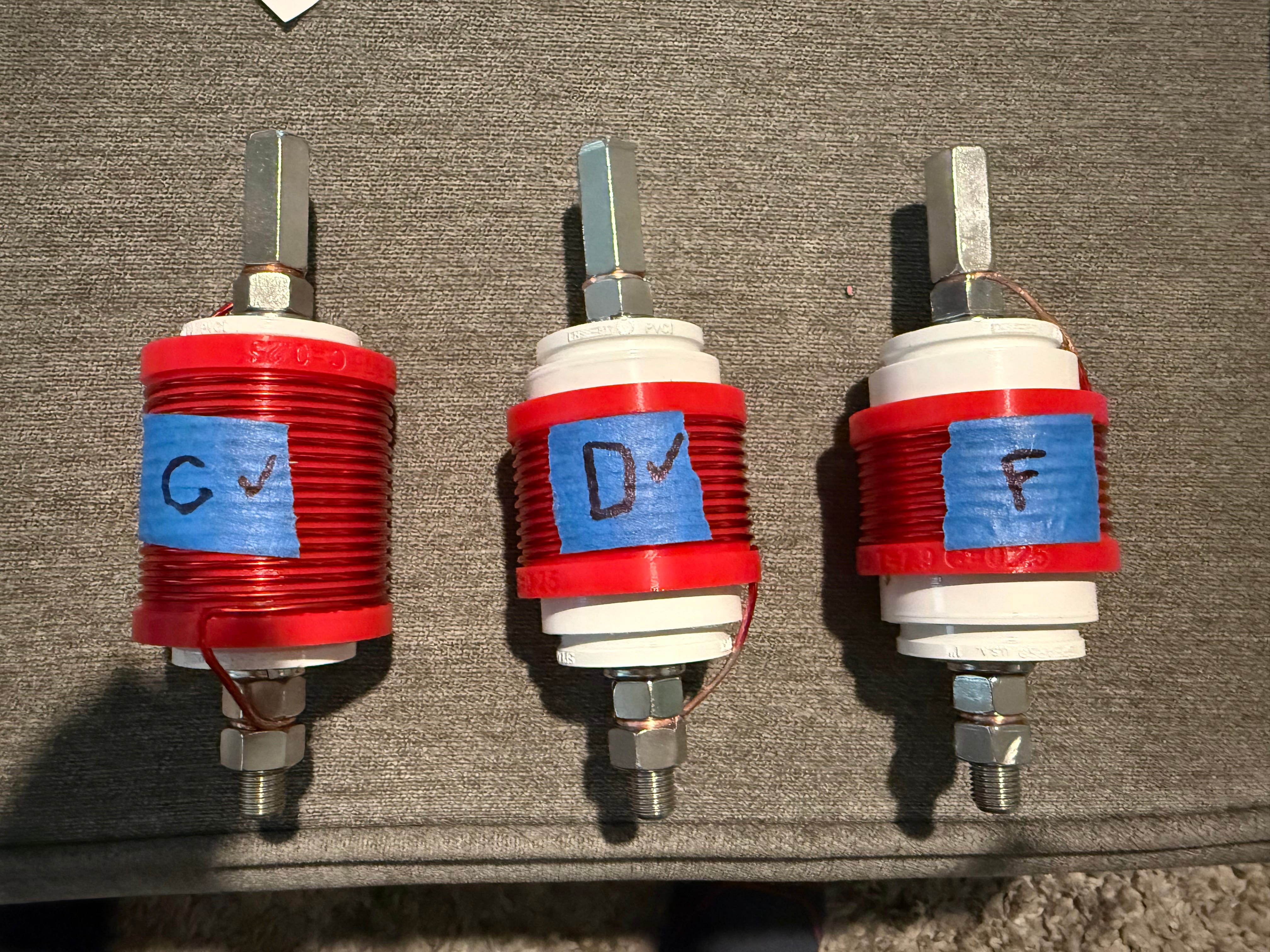
I made a point to get out and activate a park this morning. I wanted to exercise my coil prototypes in the field on a real activation, primarily to get a feel for how much they heat up during high duty cycles.
The Destination
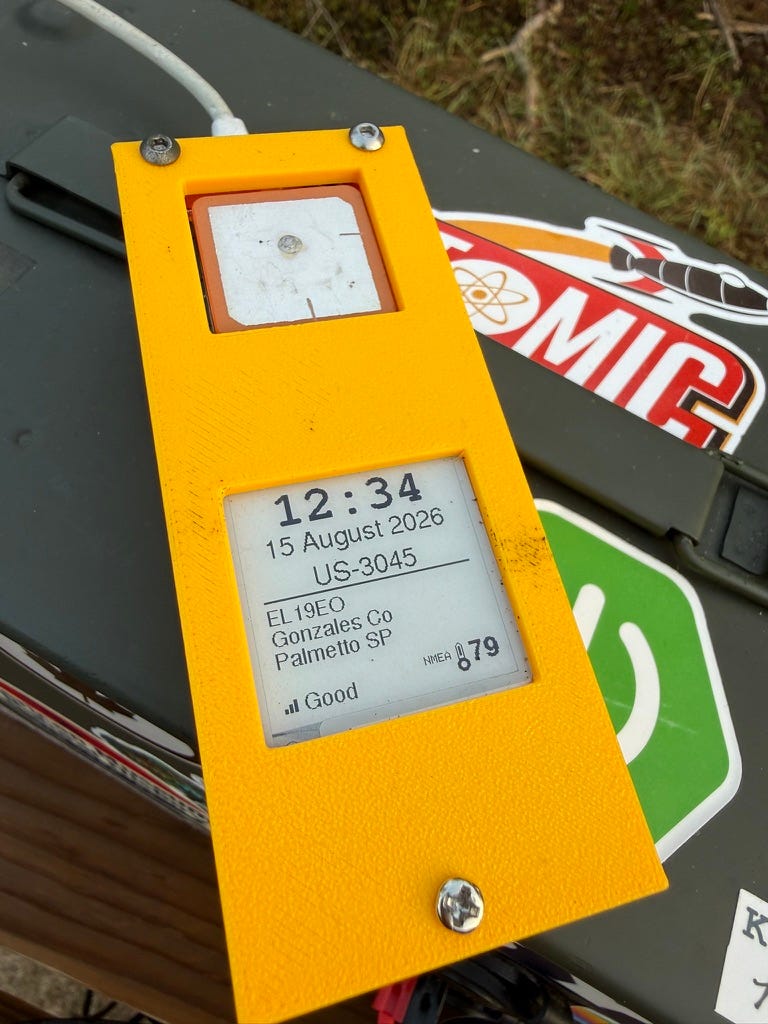
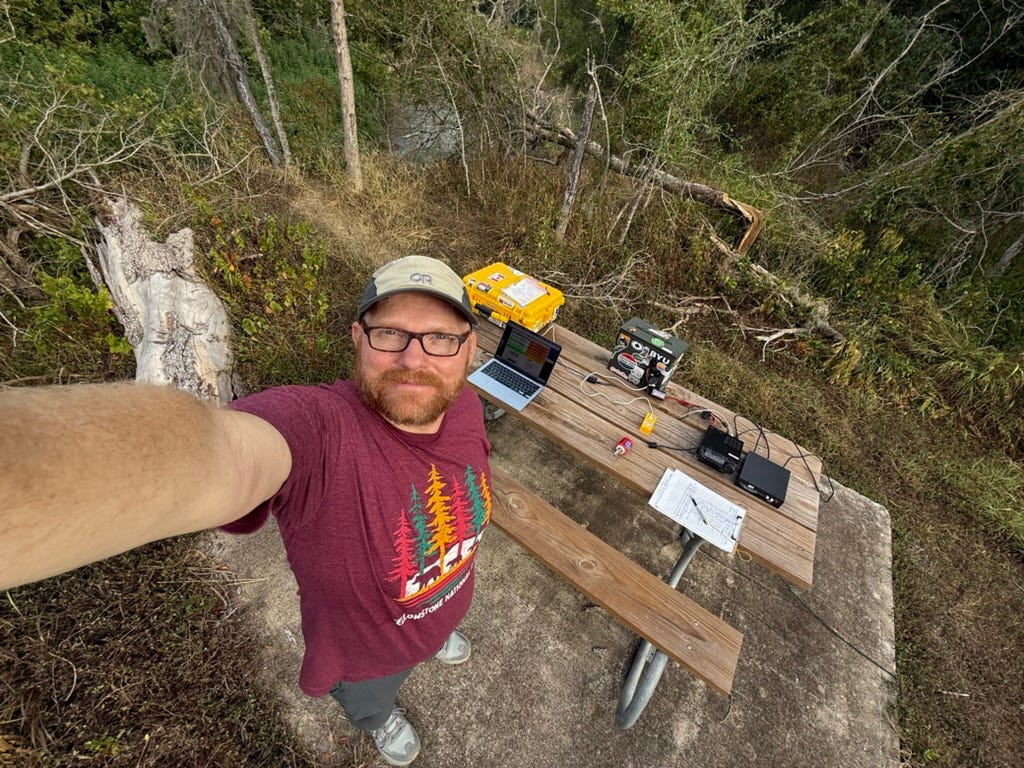
I chose Palmetto State Park for several reasons. There is no gate. I could get in early and take care of business before it got too hot. There is a nice picnic area with clear ground overlooking the San Marcos River adjacent to an archery range. When archers are not present, it is my favorite operating position using my vertical whips. I’ve never had a problem with patrons or staff at this park either. It’s one of my favorite places to activate.
The Plan
My goal today was to operate on 40 and 30 meters using FT8 with the following antenna configurations:
CHA SS25 with 40 meter coil (9.3 turns)
CHA SS17 with 40 meter coil (15.75 turns)
CHA SS17 with 30 meter coil (7.9 turns)
This would be using my FT-891, hopefully going up to 50 watts. I’d be using 3x 33’ radials plus 3x 17’ radials. This has been my go-to radial setup for this antenna for years. I planned to start around 7:30 AM (1230 UTC).
Weather note: we had a tiny bit of rain yesterday. It was threatening rain as I arrived, and fortunately (?) only delivering on humidity. I was drenched in sweat by the time I had laid out my radials.
Test 1: CHA SS25 With Base-loading for 40 Meters
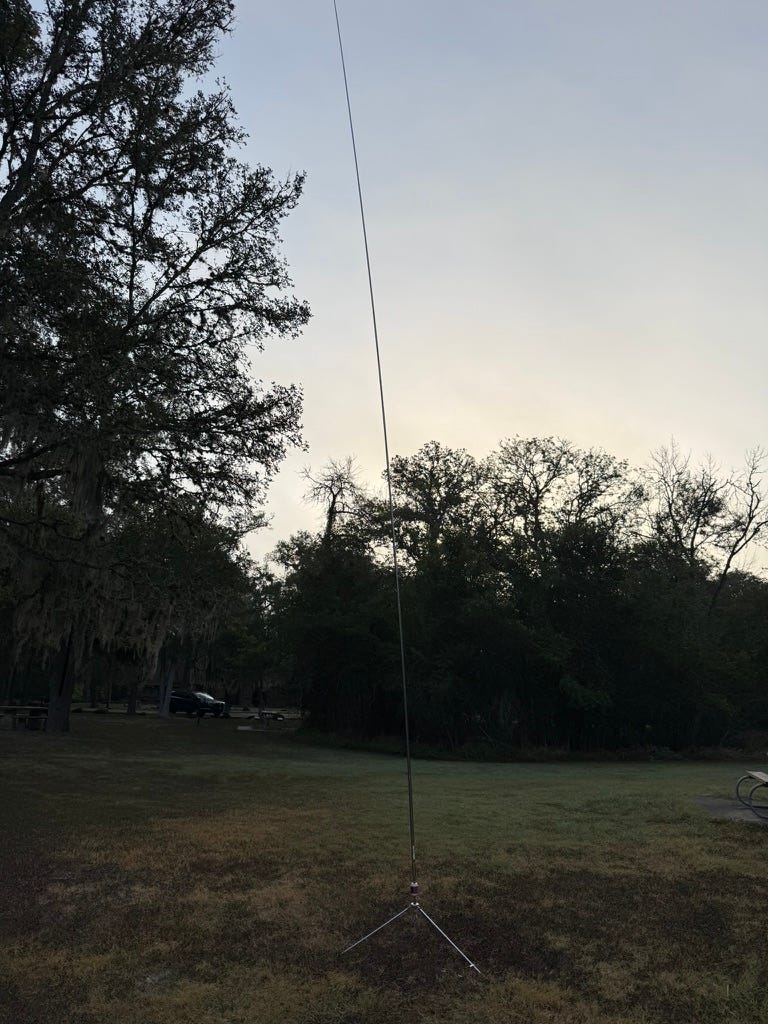
Backyard SWR measurments had this at less than 1.4 across the 40 meter band. X=0 was right at 7.154 MHz, so I was excited to get it in the field. My initial field measurment showed resonance shifting higher by over 200 kHz. I wasn’t happy about that. :( Low side of the band was still less than 1.5, so I went ahead with the activation.
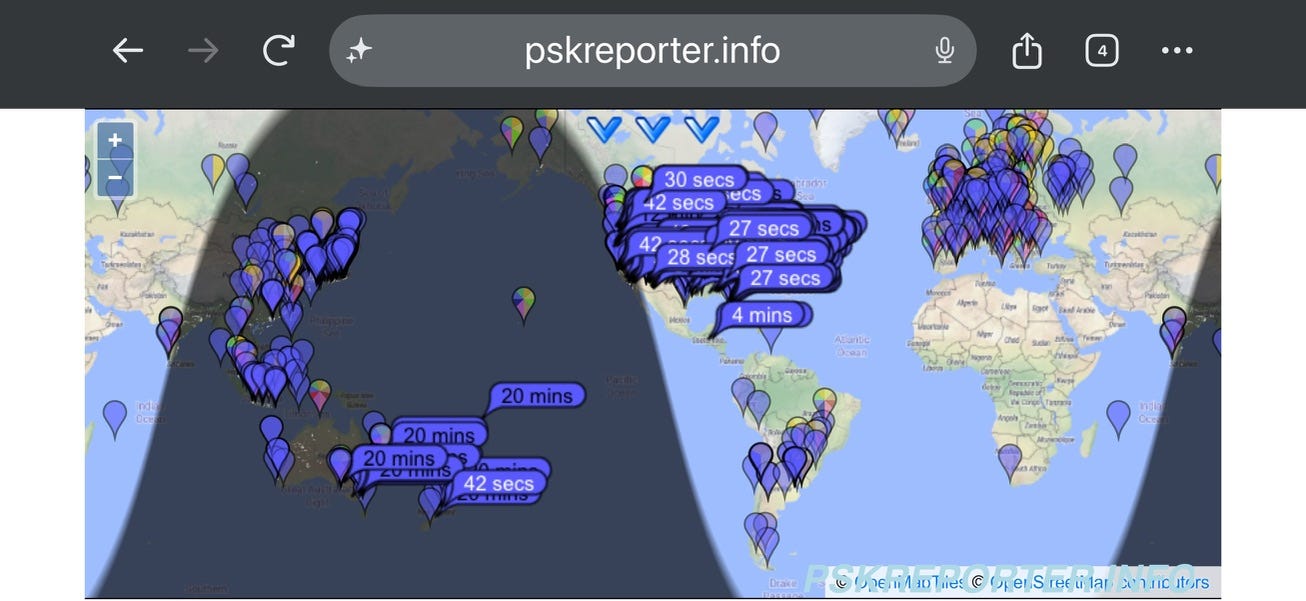
At 25 watts I was getting heard coast-to-cost and as far away as Australia. I know some of this is band conditions, but I wouldn’t be able to take advantage of it without a decent antenna.
I dialed the power up in 5-watt increments. At 40 watts I starting having problems with CAT/USB to the rig which made WSJT-X pretty unappy. I could definitely do with better shielding and choking on this setup… I eventually realized that as long as I don’t touch the computer during transmit, I had no problem going has high as 50 watts. (I probably could have gone higher, but didn’t try). No heat problems.
As I took the whip down I noticed that one segment wasn’t fully extended. This explained the resonance shift I observed. Nice.
Test: PASS
Test 2: CHA SS17 With Base-Loading for 40 Meters
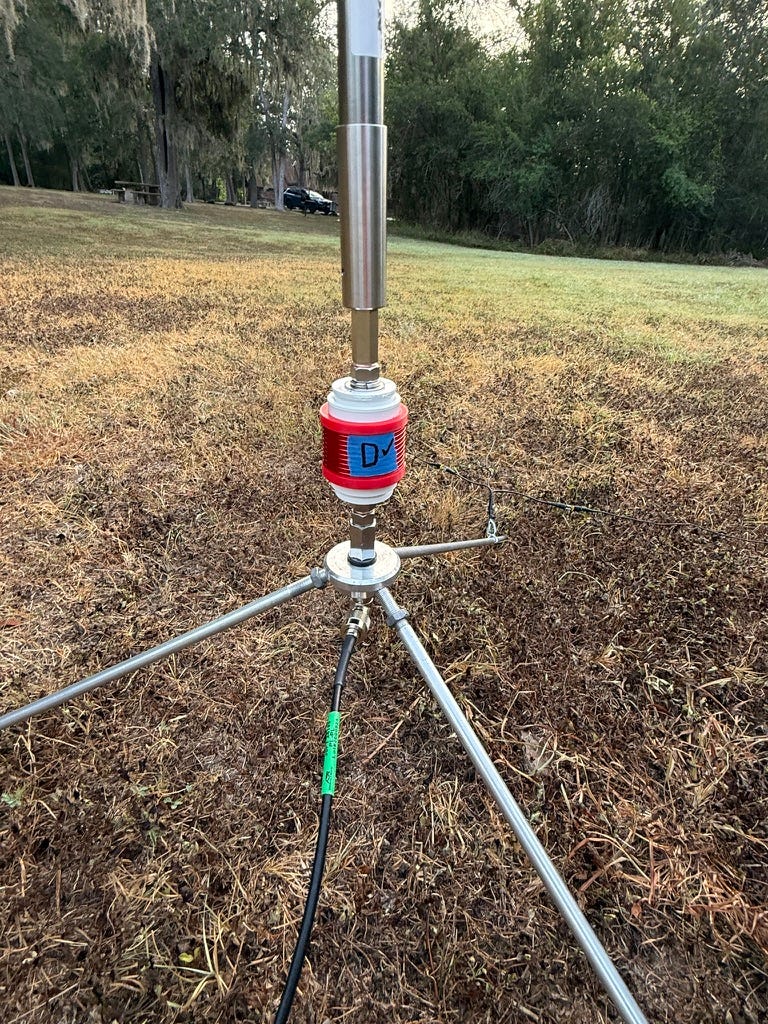
This one tested with SWR readings less than 1.3 across the band. It held up well during the activation. No observed problems with heat. I was still being heard in Australia and even managed a successful contact with a JA station.
Test: PASS
Test 3: CHA SS17 With Base-Loading for 30 Meters
This coil is still a work in progress. For some reason I didn’t measure it in the field today. However, I did notice my rig reporting SWR around 1.5. I had no problem making contacts, but I will continue to iterate on this one. No issues with heat.
Test: NEEDS WORK
Heat Wasn’t an Issue
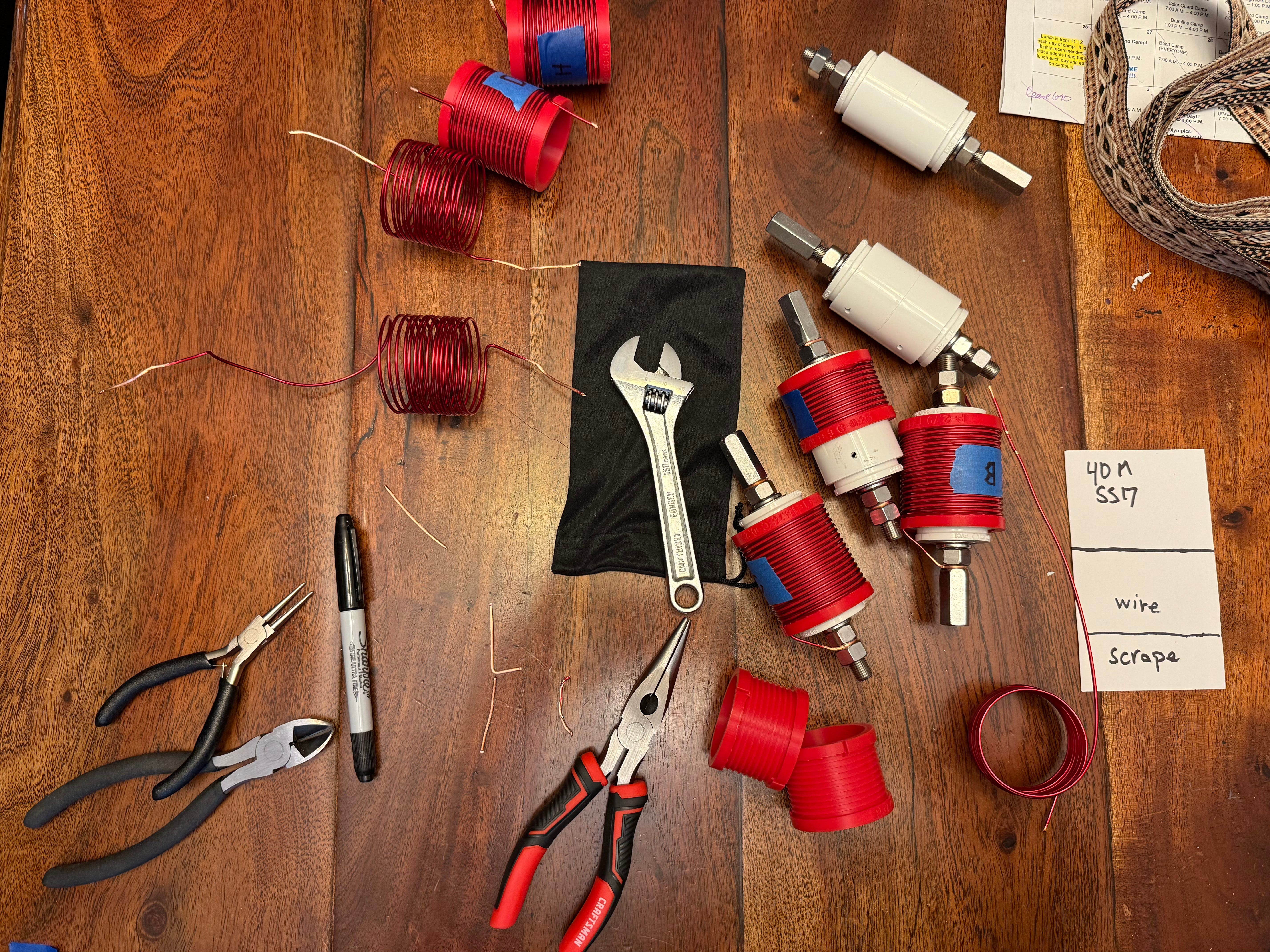
Even when operating at 50 watts I was unable to detect any real heat in these coils today. I’m reasonably confident this is due to my choice of using copper instead of the stainless steel we see in so many other coils. Electrically copper is just a better material.
Stainless steel has roughly 40 times the DC resistivity of copper. Skin effect does narrow that difference at HF, but it doesn’t disappear. At 7 MHz, the RF surface resistance of stainless is roughly 6 times that of copper. In loading coils like these, that additional resistance is simply loss (heat).
Less resistance also means a higher-Q coil. Stainless has roughly 6x the RF surface resistance of copper at 7 MHz, although that doesn’t necessarily translate into a full 6x improvement in the Q of the finished coil. It’s not a huge advantage in terms of S-units, but I’ll take better Q and running cooler any day.
This means I’ll be able to use PETG to print these. It’s easier to work with than ASA, which is what I was gearing up for.
Summary
This activation demonstrates I’m ready to start building and shipping 40 meter coils again. I won’t be too afraid to market them at 50+ watts for digital contacts either.
I also plan to introduce a 30 meter coil for the 17ft whips (it’s one of my favorite bands).
Also, I need to get a sane cable setup so I can have more digital fun with my FT-891.